
The PM will pay a two-day visit to Japan from October 28-29 to hold the annual India-Japan summit with Abe. The focus of the visit will be to further expand cooperation in the Indo-Pacific region, carry out joint infrastructure projects in third countries and further boost ties key sectors like defence and trade.

The bullet train is expected to cover 508 km between Mumbai and Ahmedabad in about two hours.

The India-Japan global partnership is based on shared democratic values and respect for the rule of law and promotes peace and stability in the Indo-Pacific, Prime Minister Narendra Modi said on Monday after holding wide-ranging talks with his Japanese counterpart Fumio Kishida.
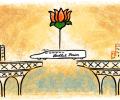
Apart from land acquisition, another major cause for concern before the project is cost escalation owing to a fall in the rupee against the Japanese yen.
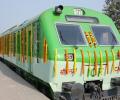
The government has identified eight corridors to raise speed of existing trains.
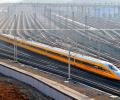
Passengers will get the thrill of riding under the sea while travelling between Mumbai and Ahmedabad
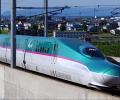
The state government and the company are embroiled in a legal dispute since 2019 over the acquisition of the company-owned land in Vikhroli for the bullet train project.
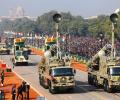
Moving ahead with the economic reforms, the Cabinet tonight cleared the long-delayed proposal for raising FDI limit in defence to 49 per cent and fully opened up the railway infrastructure segment, like high-speed trains, for foreign investment.
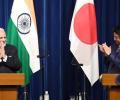
During the 13th annual summit, the two prime ministers reviewed developments in bilateral relations and explored new areas of cooperation, focusing on shared vision for peace and prosperity in the Indo-Pacific, where China is flexing its muscles.
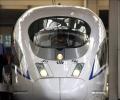
Japan offers India soft loan for $15 bln bullet train in edge over China

The 8-km-long road show would start from the Ahmedabad airport and culminate at the Sabarmati Ashram.
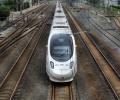
Of the Rs 1.10 lakh crore investment required for the project, Japan is providing Rs 88,000 crore as a soft loan at 0.01 per cent interest.
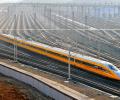
Expresses inability to provide land for train terminal in Bandra-Kurla Complex, a cash cow for MMRDA
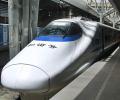
DMRC-like SPV to be floated in a month for the Rs 98,000 crore Mumbai-Ahmedabad corridor.

At this point of time, the requirement of the economy is obviously more investment, which will create more jobs and increase purchasing power that will sustain a high level of production, says K M Chandrasekhar.
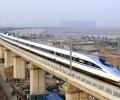
Everything you wanted to know about the Mumbai-Ahmedabad bullet train but didn't know who to ask.
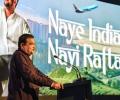
From highways connecting once-remote regions to aviation networks carrying millions, India's infrastructure story is one of transformation.

India is currently considering two corridors for high speed trains.
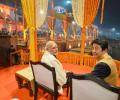
'Modi and Abe are working seriously for India-Japan bonhomie to grow stronger.' 'It is a win-win situation for both countries and the future look promising,' says Rajaram Panda, the Indian Council for Cultural Relations India Chair Visiting Professor at Reitaku University, Japan.

India should not miss the opportunity to develop high-speed railway.
.jpg)
The railway minister said that one-third studies have already been done.

The compulsion behind India and Japan to deepen security cooperation is in response to China's growing political and economic clout and its assertive behaviour in disputed areas. This has been the key driver for bringing both India and Japan closer in the domain of security cooperation, explains Dr Rajaram Panda.

The two-day summit beginning Sunday will seek to review the progress in ties and deepen strategic dimension of the bilateral relationship.

Prime Minister Narendra Modi and his Japanese counterpart Yoshihide Suga met in Washington, DC, on Thursday to discuss ways to further cement the bilateral strategic ties ahead of the first in-person Quad meeting to be hosted by US President Joe Biden.

According to the proposed agreement, Japan will provide financial assistance to the tune of 81 per cent of the project cost as soft loan.
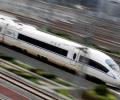
Questioning the bullet train in view of the investment needed in Indian Railways is similar to saying that India needed to invest in primary education rather than in IITs, says Shreekant Sambrani.

Prime Minister Modi, who is in Japan on a two-day visit to attend a summit of the Quad leaders at the invitation of his Japanese counterpart Fumio Kishida, penned an op-ed on the vibrant relations between India and Japan in the Yomiuri Shimbun.

The key factor in deciding the 80 new trains was the fact that there were many stations from where the migrant workers are going back to their workplace.
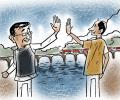
The project, the foundation stone for which was laid by Prime Minister Narendra Modi and his Japanese counterpart Shinzo Abe in September 2017, is facing resistance in eight districts of Gujarat, through which the train will run.
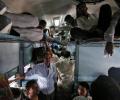
'The Centre brought down expenses by as much as Rs 12,000 crore (Rs 120 billion).'

Railway Minister Suresh Prabhu has promised to have an effective complaint redress system and bring about accountability on the part of officers in rail functioning.
.jpg)
we are facing a situation of empty coffers but eagerness to expand.

Ahead of the G20 Summit, Prime Minister Narendra Modi met his Japanese counterpart Shinzo Abe in Osaka, Japan and discussed a range of issues of mutual interest.

To understand Modi, listen to what he does not say -- vide NRC, suggests Prem Panicker.

'The politician in him saw to it that the foundation stone was laid in Ahmedabad in the run-up to the assembly election in Gujarat in 2017.' 'But the statesman in him also wants it to be his legacy.'

'While economic ties are making incremental progress, it is in the security and strategic domains that the India-Japan synergy is more compelling,' says Dr Rajaram Panda.

The strategic pacts were inked after the summit between Prime Minister Narendra Modi and his Japanese counterpart Shinzo Abe during which they also discussed international and regional issues of mutual importance including UN security reforms.

Investment in market leaders with a safety-first approach could yield reasonable returns across sectors.

The president outlined the government's agenda in the coming financial year in his customary address to the joint sitting of both the Houses of Parliament.
'Relations between India and Japan are robust and devoid of either shadow of history or any irritant.' 'In fact, there is plenty of warmth and goodwill earned over history. There are no negatives but only opportunities,' notes Dr Rajaram Panda.
 © 2026 Rediff.com - Advertise with us - Disclaimer - Privacy Policy - Sitemap - Feedback - About us - Terms of use - Grievances